

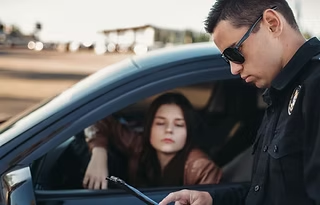
Driving with a cell phone in hand might seem harmless for a quick text or call, but it’s one of the most common reasons for traffic violations today. With modern traffic laws becoming stricter, getting caught driving with a cell phone can lead to heavy fines, demerit points, and increased insurance premiums. Understanding the consequences and how to protect yourself is essential for every driver who values their record and wallet driving with cell phone.
Why Driving with Cell Phone Is Dangerous
Using a mobile phone while driving divides your attention between the road and the screen. Even a momentary distraction can cause delayed reactions, missed signals, or serious accidents. Studies show that a driver using a cell phone is as impaired as someone driving under the influence of alcohol. When your eyes leave the road for just two seconds, the risk of a collision doubles.
Many drivers think a short glance at a notification or a quick text reply won’t cause harm. However, the reality is that those few seconds can be enough to change your life or someone else’s forever. Authorities enforce these laws not to inconvenience drivers, but to save lives and reduce preventable accidents caused by distractions.
The Legal Consequences of Driving with Cell Phone
If you’re caught driving with a cell phone, you can face serious legal and financial consequences depending on your region’s traffic laws. Typically, the penalties include:
- Fines: You may have to pay a substantial fine, which increases with repeated offenses.
- Demerit Points: Each violation can add demerit points to your driving record, bringing you closer to suspension.
- License Suspension: Accumulating too many demerit points can lead to the suspension or revocation of your driver’s license.
- Insurance Impact: Your insurance provider may raise your premium, considering you a high-risk driver.
Even a first-time offense can lead to steep penalties, while repeat violations may result in higher fines or court appearances. Some jurisdictions have even implemented mandatory driver safety courses for offenders to regain lost points.
How Driving with Cell Phone Affects Your Demerit Points
Demerit points are part of a system that monitors driving behavior. When you commit a traffic offense, points are added to your driving record. Each region sets its own threshold for how many points you can accumulate before facing consequences.
For instance, getting caught driving with cell phone might add anywhere from 3 to 6 demerit points. These points stay on your record for a certain period, usually two years, depending on the severity of the offense. Accumulating too many can result in a suspended license or other penalties.
Even if you think the fine is manageable, those points can cause long-term damage to your driving history and lead to significant insurance increases.
The Impact on Your Car Insurance
Insurance companies view drivers caught driving with cell phone as higher risks because the behavior is directly linked to distracted driving accidents. Once your insurance provider learns about your violation, they may:
- Increase your insurance premium
- Reclassify you as a high-risk driver
- Refuse to renew your policy in severe cases
These consequences can last for several years. Even one ticket for driving with a cell phone can increase your insurance rate by 10% to 25%, depending on your record and the insurer’s policy. Over time, this can cost you hundreds or even thousands of dollars.
How to Protect Your Demerit Points and Insurance
Getting caught driving with a cell phone doesn’t mean your driving record is permanently ruined. There are steps you can take to protect yourself legally and financially.
1. Check the Ticket for Accuracy
When you receive a ticket, carefully review it for errors. Inaccurate information—such as the wrong date, location, or details—can be grounds to challenge the charge. Small clerical mistakes might seem insignificant, but they can make a difference if you contest the ticket in court.
2. Contest the Ticket in Court
If you believe the ticket was issued unfairly, you can challenge it. Many drivers succeed in reducing fines or avoiding demerit points through legal representation or self-representation in traffic court. A lawyer who specializes in traffic offenses can help identify technical errors or negotiate a reduced penalty.
3. Take a Defensive Driving Course
Some jurisdictions allow drivers to take an approved defensive driving course to reduce or eliminate demerit points. Completing such a course not only improves your driving skills but also demonstrates responsibility to both the court and your insurer.
4. Notify Your Insurance Company Strategically
If your insurance provider hasn’t yet learned about your violation, it might not immediately affect your rate. However, most insurers check driving records during renewal. If your policy is due for renewal soon, you may want to compare quotes from other providers to find better rates before your violation appears on record.
5. Use Hands-Free Devices Going Forward
Prevention is always better than cure. To avoid future penalties, invest in hands-free technology such as Bluetooth earpieces, car mounts, or voice-command systems. Most modern vehicles come equipped with built-in systems that allow you to make and receive calls safely. Using these options helps you stay compliant with traffic laws while remaining connected.
Common Myths About Driving with Cell Phone
There are many misconceptions surrounding mobile phone use while driving. Let’s clear up some common ones:
- Myth: “I can use my phone at a red light.”
Reality: Most regions prohibit using your phone even at stoplights, as you are still technically in control of the vehicle. - Myth: “It’s fine if I’m using speaker mode.”
Reality: If you’re physically holding the phone, you can still be fined. The law focuses on distraction, not just conversation. - Myth: “I can check GPS or change songs—it’s not texting.”
Reality: Any form of handheld phone use, including navigation or adjusting music, can count as distracted driving. - Myth: “First-time offenses don’t affect insurance.”
Reality: Even a single ticket for driving with cell phone can impact your premiums, especially with insurers that monitor driving records closely.
The Safe Way Forward
The simplest way to avoid penalties and protect your driving record is to adopt safe driving habits. Keep your phone out of reach while driving, use voice assistants, or pull over safely before checking notifications. Developing this discipline not only helps you stay compliant with the law but also protects everyone on the road.
Technology can be your ally rather than your enemy. Features like Do Not Disturb While Driving, available on most smartphones, automatically silence notifications and send automatic replies to messages. Enabling this function ensures you stay focused and distraction-free.
Conclusion
Driving with cell phone may seem harmless for a brief moment, but the legal, financial, and personal consequences can last for years. From hefty fines and demerit points to insurance hikes, the risks far outweigh the convenience. If you’ve been caught driving with a cell phone, take action immediately—check the ticket, consider contesting it, and enroll in a defensive driving course if available.